WHO IS SHE?
Natalia James is a Mexican artist, songwriter, producer, and engineer based in Los Angeles, creating cinematic Spanglish alt-pop for the moments that feel bigger than life itself.
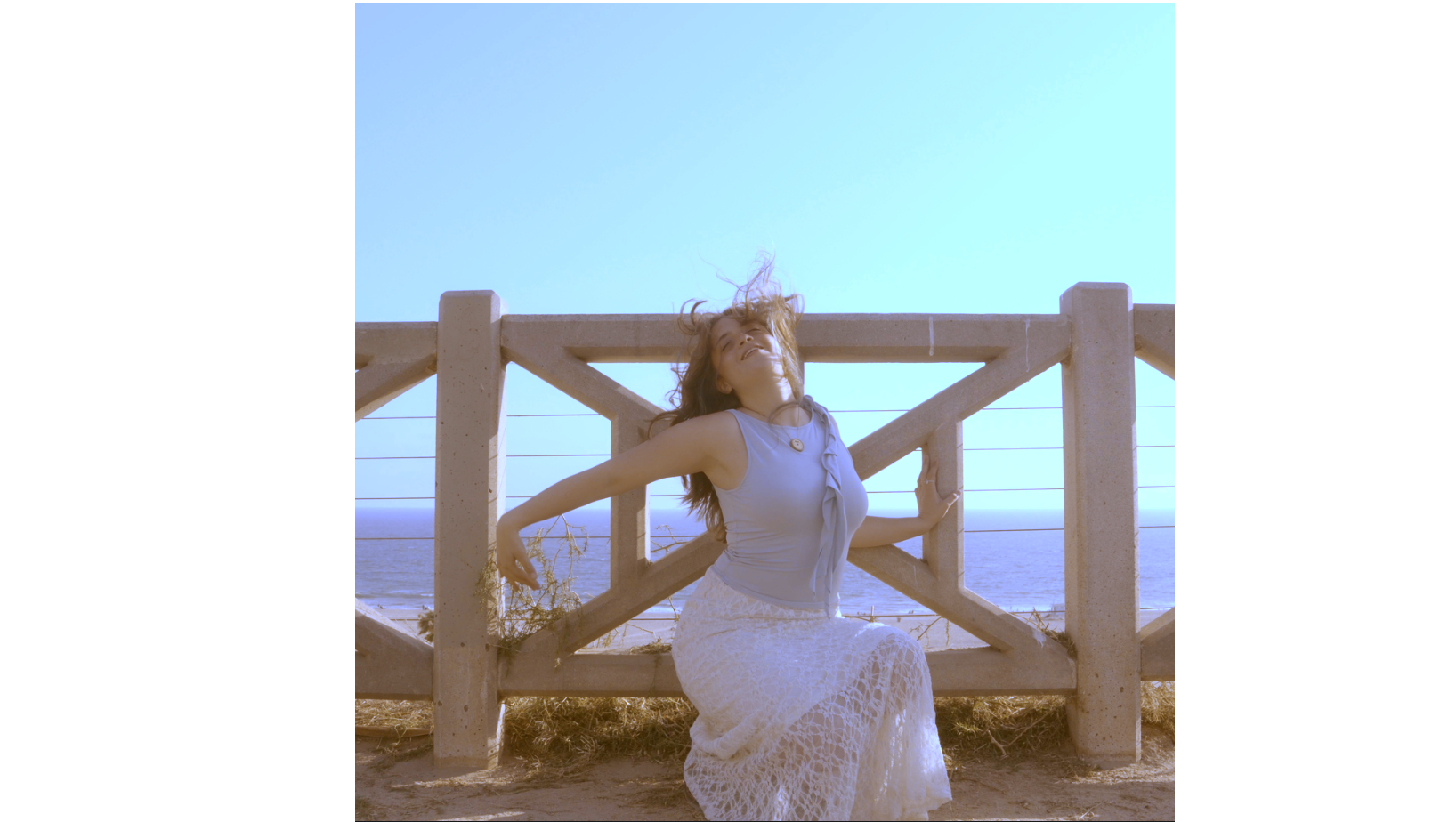
Meet Natalia
Natalia James creates cinematic Spanglish alt-pop for the moments that feel bigger than life itself. Effortlessly weaving English and Spanish, her songs transform quiet emotions into vivid, immersive worlds, unfolding like scenes from a film—intimate, nostalgic, and emotionally charged. Originally from Mexico and now based in Los Angeles, Natalia approaches songwriting, production, and sound as different parts of the same storytelling process. Her music doesn’t just tell stories; it invites listeners to live inside them
Between Two Worlds
Growing up between cultures shaped the way Natalia experiences emotion. She learned early on that life rarely fits into neat categories—that two languages, two perspectives, and even two conflicting emotions can exist at once. Her songwriting embraces that complexity, moving fluidly between English and Spanish as she explores the beautiful contradictions of being human. Rather than choosing one language over the other, she lets each lyric land in the language that expresses it most honestly, creating music that feels deeply personal while resonating far beyond her own experiences
NATALIA JAMES AT A GLANCE:
Aka: nat james
Originally from: Mexico
Based in: Los Angeles, California
Cinematic Spanglish alt-pop
Artist · Songwriter · Producer · Engineer
English · Spanish
VOCAL LAYERS
CREATIVE PERCUSSION
ORGANIC × SYNTHETIC ·INTIMATE × CINEMATIC
ENGLISH × SPANISH
Behind the Sound
Natalia’s relationship with production started almost by accident. At twelve, while recording one of her first songs with her father, she found herself “couch producing” saying yes to some ideas and a very definite no to others. Afterward, she told him she wanted to be able to keep making music when she was at her mother’s house, so he gave her an interface. One of her first calls to him was to ask why her microphone wasn’t making any sound.
“Did you press the button that says 48V?”
It was her introduction to phantom power. In a way, it introduced her to a much bigger world she would spend the next several years learning to navigate.
Her musical education developed from several directions at once. She sang in choir, studied piano and drums, learned pieces of Ableton from her father and YouTube, and, during her final year of high school, earned one of five places from roughly 500 applicants to the Jazz Institute of Mexico.
But much of her education happened inside a recording studio.
Before pursuing mechanical engineering at UC Berkeley, Natalia decided she needed to give the possibility of a life in music a real chance. Through an uncle who had worked at Sonic Ranch, she asked for an internship at the residential recording studio in Tornillo, Texas. She was initially offered one month. By the end of it, the studio’s owner and manager offered her a paid position. What began as a month-long experiment became a three-year education in how records, and the environments that make them possible, actually come together.
At Sonic Ranch, Natalia worked across both the technical and operational sides of the studio: assisting sessions, learning engineering, helping coordinate rooms and calendars, supporting the residential side of the studio, running social media for a period, and building its new website. Some lessons happened behind a console; others happened over breakfast, where engineer friends would draw signal-flow diagrams on whiteboards and teach her concepts they had spent years studying.
She learned Pro Tools by watching engineers work, asking questions at the right moments, and absorbing the habits of people whose craft she admired. One of the earliest pieces of advice she received from engineer Peter Gaiser was simple: learn every shortcut. So she did. Within roughly a year, she could run a Pro Tools session herself.
Engineering became more than a technical skill. Natalia became fascinated by the fact that there is rarely only one way to arrive at a sound, the process itself is an art. That lesson also gave her something to unlearn: technical knowledge can tell you the “correct” way to record something, but creativity sometimes begins by forgetting the default and asking a different question: I have this. I want it to sound like that. How do I get there?
During those years, Natalia worked primarily as an assistant engineer across numerous recording projects while quietly developing her own music. Being surrounded by artists, producers and engineers she deeply respected created its own pressure: if she was going to call herself a producer, she wanted to make something she could stand behind without explaining what still needed to be fixed.
That became Days Spent, the first Natalia James song she considered fully produced: written, arranged, recorded and developed to the point where she could send it to mixing without an asterisk. She handled the production through that stage, including vocal arrangement and production, while collaborating on elements including drum programming. Finishing it became an exercise in trusting her decisions. Not only as a producer, but as a person figuring out what she wanted her life to look like.
That same instinct now sits at the center of Natalia James.
She is drawn to contradiction: organic sounds against synthetic ones, creative percussion against intimate songwriting, English against Spanish, and especially voices layered, chopped and transformed until they become part of the instrumentation. Just as she moves between languages according to what an emotion needs, she moves between sonic worlds according to what the story needs.
For Natalia, production is not decoration added after a song is written. It is another layer of storytelling. A gritty synth can communicate something a lyric cannot; a vocal hidden in the background can change the emotional meaning of a moment; a sound can function like the color of a curtain in a film set. Perhaps unnoticed consciously, but chosen because it tells you something about the character.
She still believes the song underneath should survive without any of it. Her analogy is banana bread: if the bread is good, it should be delicious on its own. Covering it in chocolate can transform the experience, but the chocolate cannot be the reason the bread works.
Ultimately, Natalia uses production to create a place where listeners can feel what they may not have been allowing themselves to feel. The goal is not simply to communicate an emotion, but to build a world around it: A time and space where feeling deeply is safe, contradictions are allowed to coexist, and an emotional realization can arrive before the listener has even found words for it.